The short answer
Before you choose a buyer, list every dollar by type (Morgan or Peace), date, and mint mark, and set aside certified coins, original packaging, nicer-looking coins, and anything flagged as scarce. Common worn dollars can usually be quoted as a group. Set-aside coins should be priced one by one. For most families, two or three written offers from reputable coin dealers is the simplest path. Auction can suit better or certified coins. Selling online yourself is more work than it looks.
Know the silver floor first
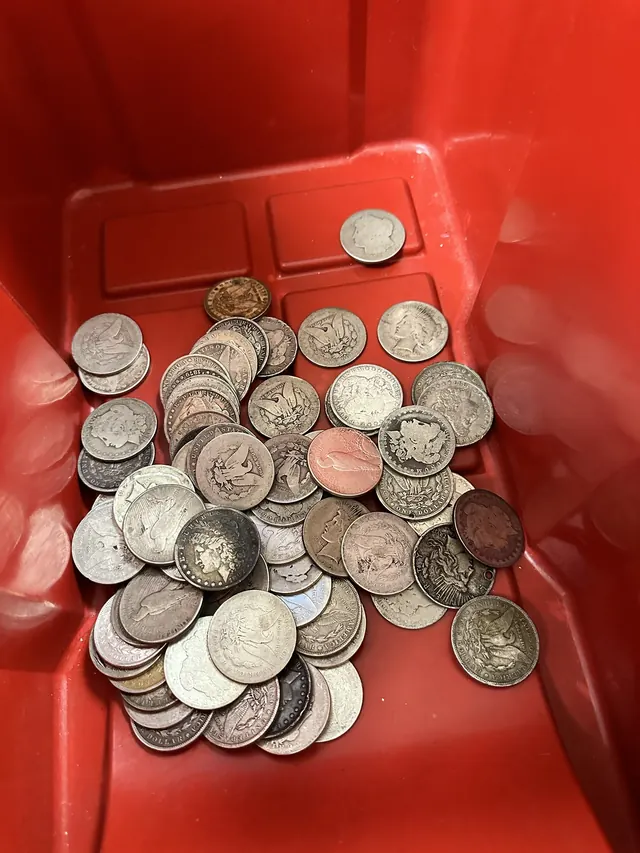
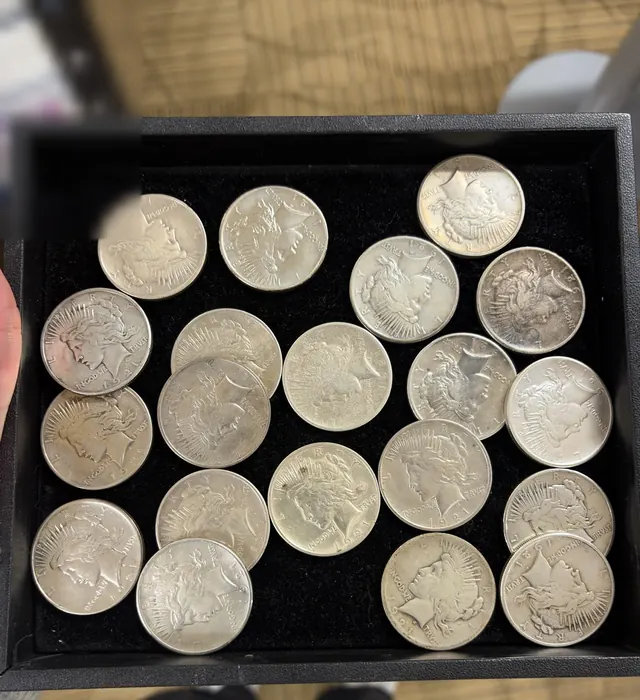
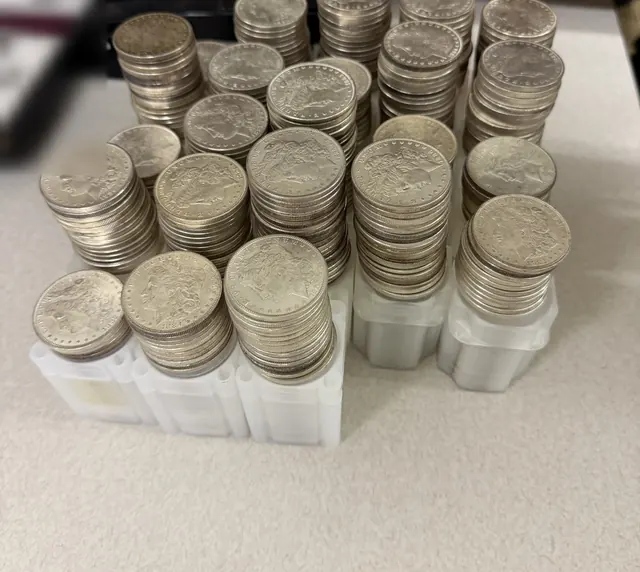
Morgan dollars (1878–1904 and 1921) and Peace dollars (1921–1928 and 1934–1935) are 90% silver and contain 0.7734 troy ounces of silver each. Multiply that by today’s silver price for the current melt figure.
That number is a floor, not the price of every coin in the can. Even common Morgan and Peace dollars often sell above melt because collectors want them. A few dates, mint marks, and high-condition coins are worth much more than their silver. Selling the whole can as one lot, on the first offer, is how those pieces disappear into a bulk price.
Sort before you sell
Hold the coins by the edges, and never clean them. Then make a simple list: type, date, and mint mark.
- On a Morgan dollar, the mint mark is on the back, below the wreath and just above the letters “DO” in DOLLAR.
- On a Peace dollar, it’s on the back, below the word ONE, near the tip of the eagle’s wing.
- No letter usually means Philadelphia. CC is Carson City, O is New Orleans, S is San Francisco, and D is Denver.
Set aside anything in a certified PCGS or NGC holder (leave it sealed), anything in original packaging such as GSA Carson City holders or U.S. Mint boxes, coins that look clearly nicer or mirror-like, and any date or mint a trusted dealer flags as scarce. Dates like the 1893-S, or Carson City coins such as the 1889-CC, deserve an expert look before anyone makes you an offer.
Places that are usually a poor first stop
Pawn shops, jewelry stores, and “we buy gold and silver” counters are set up to buy metal quickly, not to sort Morgan and Peace dollars by date and mint or pay a collector price on a better coin. Take a mixed can there first and you’ll often be offered something close to a melt-related number for the whole group.
Unsolicited calls or mailers after a death notice are a red flag. The U.S. Commodity Futures Trading Commission advises consumers not to respond to unsolicited offers involving precious metals.
Coin dealers
A reputable coin dealer is often the most straightforward place to sell a mixed group of inherited silver dollars. There’s usually no separate commission; the dealer’s margin is built into the offer. That’s why you compare offers.
Check how long the dealer has been in business and whether they belong to the Professional Numismatists Guild (PNG), which you can confirm in PNG’s public directory. Then ask for a written offer on your list: a per-coin or total figure for the common worn dollars, and item-by-item prices for the coins you set aside. Collect two or three offers before you decide, and don’t accept pressure to sell the same day.
Auction houses
Auction can make sense for better-date, high-condition, or already certified dollars, where the right audience may pay more than a dealer will bid. It’s usually a slower and less efficient way to sell a pile of common, worn coins.
Read the consignment terms before you sign. Seller’s commissions, buyer’s premiums, minimum consignment values, and payout timing all vary by house, and payment often comes weeks after the sale. Compare what you’d actually receive after fees with your best dealer offer.
Selling online yourself
Marketplaces such as eBay let you reach many buyers, and you keep more control. You also do the photography, the listing, the packing, and carry the risk of returns or disputes. Selling fees are a percentage of the total sale, so check the current fee table for coins before you list.
Inherited dollars include well-known counterfeits of scarce dates. If a coin might be a key date, get a qualified in-person look or professional certification before you ship it to a stranger.
How to meet and ship safely
Don’t ship coins to anyone before you have terms in writing and a plan for insurance. Many professionals prefer USPS Registered Mail for valuables; confirm current options and insurance limits with the carrier.
For an in-person sale, use a shop, a bank, or another safe public place. You don’t have to bring the entire collection to a first meeting. Bring the list, and bring the coins only when you’re ready to complete a sale you’ve already agreed to in writing.
A simple way to decide
| What you have | Usually the best route |
|---|---|
| Common, worn dollars in quantity | Two or three written dealer offers on the same list |
| Better dates, high-condition, or certified coins | A specialist dealer or an auction. Don’t let them get averaged into a bulk lot |
| Anything you can’t identify, or that might not be genuine | Pause and get an in-person opinion before you sell |
What to do next
The Inherited Silver Dollars Guide ($15) walks you through all of this with photos: telling real Morgan and Peace dollars from look-alikes, complete date-and-mint tables, a “look twice” list of key dates, a sorting workbook with a melt calculator, and word-for-word scripts for getting written offers.
Questions
Where is the best place to sell inherited silver dollars?
For most families, a reputable coin dealer, after getting two or three written offers on the same list. Auction can suit better or certified coins.
How much silver is in a Morgan or Peace dollar?
0.7734 troy ounces of pure silver. Multiply by today’s silver price for the melt value.
Where is the mint mark on a Morgan dollar?
On the back, below the wreath and just above the letters “DO” in DOLLAR. On a Peace dollar, it’s on the back below the word ONE.
Should I sell silver dollars to a pawn shop?
Usually not as a first stop. Pawn shops and jewelry counters tend to buy on metal value and may not pay a collector price for better coins.
Educational only. This isn’t an appraisal, a price guarantee, an offer to buy or sell, or legal or tax advice. Coin values change daily. The views are the author’s own.