The short answer
Old coins have two kinds of value. Melt value is the metal: the silver or gold content times today’s price. Collector value is what someone will pay for the coin as a coin, based on date, mint mark, condition, and whether a set is complete. Work out melt yourself, look up any certified coins on the official PCGS or NGC sites, and then get two or three written offers on the same list. Price guides and phone apps are not offers.
Start with two different numbers
Melt value is the metal. For a 90% silver coin, it’s the silver in the coin times today’s silver price. A Morgan or Peace dollar, for example, contains 0.7734 troy ounces of silver. If silver were $30 an ounce, one of these coins would hold about $23 of silver. That’s just math, not a price.
Melt is a floor, not a selling price, and not an appraisal. Offers on common, worn silver often sit near that floor, and they vary by market and buyer, which is why you get more than one written offer.
Collector value is what someone will pay because of the date, the mint mark, the type, the condition, and whether a set is still complete in its original packaging. You often need both numbers, but you shouldn’t treat them as interchangeable.
Melt value, in one line: pure metal content (troy oz) × today’s spot price. Check a live spot price on the day you do the math, and write the date next to it.
What’s usually in a box of inherited coins
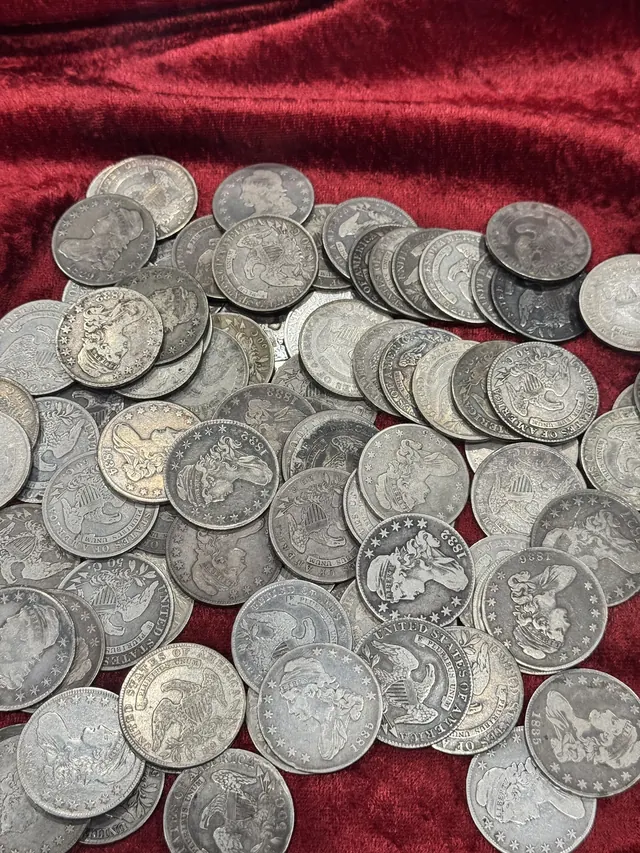
A typical inherited box is a mix: not a hidden fortune, and not “just face value.” You may find:
- Wheat cents (1909–1958) and later Lincoln cents. Most circulated wheat cents are common, but a few dates deserve a closer look, so list them before selling the jar as a group. A 1943 steel cent looks unusual but isn’t automatically rare.
- Wartime nickels dated 1942–1945 with a large mint mark above Monticello. These are 35% silver. Some 1942 nickels are ordinary nickel, so the mint mark matters.
- Dimes, quarters, and half dollars dated 1964 and earlier: 90% silver.
- Kennedy half dollars dated 1965–1970: 40% silver.
- Dimes and quarters from 1965 on, and halves from 1971 on: copper-nickel clad, with no silver, apart from a few special collector issues.
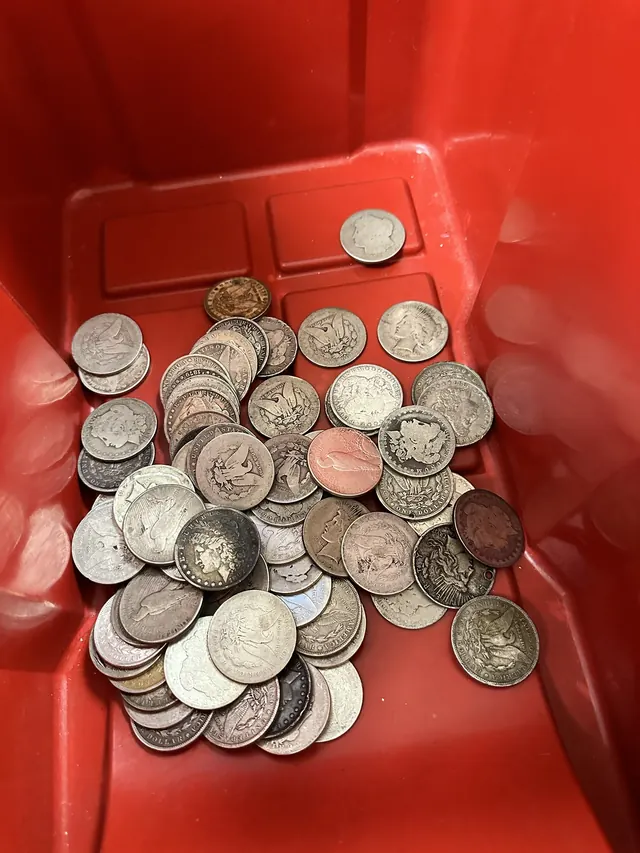
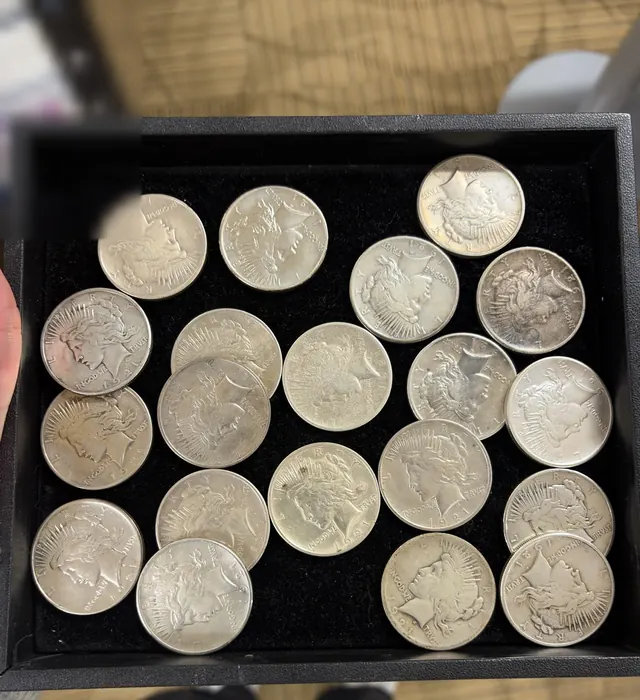
- Morgan dollars (1878–1904 and 1921) and Peace dollars (1921–1928 and 1934–1935): 90% silver, about 0.77 oz each.
- Proof and mint sets in government packaging, which should stay together. Many 1970s–1990s sets aren’t a windfall, but keep them intact anyway.
- Occasionally a gold coin, a certified holder, or a better date. Those are the ones to set aside, not toss into a bulk sale.
Private-mint medals in fancy cases aren’t the same as U.S. Mint coins, even when they come with a certificate of authenticity.
Anything that might be gold
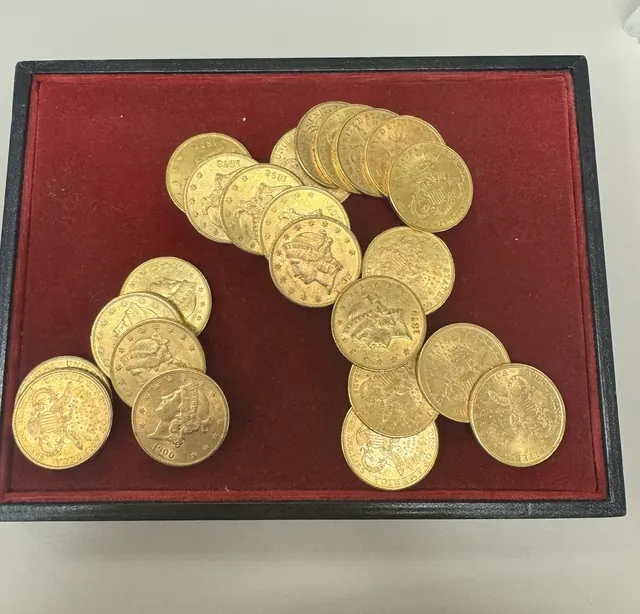
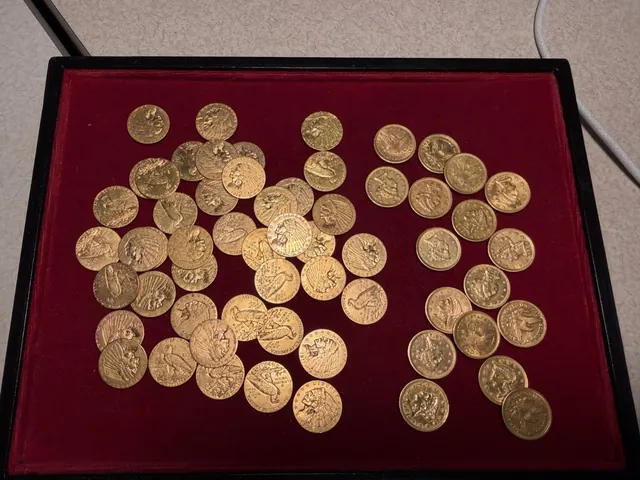
Even common gold coins pack a lot of value into a small space. If anything might be gold, pull it out and keep it separate. U.S. gold coins made before 1933 run from the $20 double eagle, with just under an ounce of gold, down to the tiny $1 gold dollar. Many carry a collector premium over melt, especially scarcer dates and nicer condition.
If a gold-colored coin feels light, looks brassy, or is marked “COPY” or “layered,” don’t assume anything. Set it aside and have it identified.
How not to lower the value while you find it
- Never clean a coin. Not with a cloth, water, soap, toothpaste, baking soda, or “coin cleaner.” It can’t be undone.
- Don’t split up proof sets, mint sets, rolls, or albums. Keep the handwritten notes, envelopes, and holders too.
- Don’t open a certified holder. Write down the cert number and look it up only on the official PCGS and NGC verification pages.
- Photograph the box as you found it, then the groups, any gold, and both sides of coins that are already out of their holders.
The full list is in What to do with inherited coins: 7 steps before you sell.
How to get a number you can trust
Price-guide pages and phone-app “grades” aren’t offers. The major guides, including the PCGS and NGC price guides, typically show retail or dealer asking prices, often for coins that are already certified. What a buyer will pay you for raw inherited coins is a different figure.
For a reality check, look at sold listings online, not asking prices. Asking prices are wishes. Sold prices are data.
Then get two or three written, itemized offers on the same list, and tell buyers up front that you’re getting more than one. When you check out a buyer, start with how long they’ve been in business and whether they belong to the Professional Numismatists Guild (PNG). Membership isn’t a guarantee, but you can confirm it yourself in PNG’s public directory at pngdealers.org.
Don’t take the whole box to a jewelry store or pawn shop as a first stop. Those counters are set up to buy metal, not to sort dates, mint marks, and original sets.
Is it worth getting coins graded?
Usually not. Grading means sending a coin to a service like PCGS or NGC to be authenticated, graded, and sealed. You pay the fee, insured shipping both ways, and then you wait.
Coins are worth grading when they’re collectible for more than their metal and in good enough condition that the certified holder adds more than it costs. Worn common silver, bullion, or a jar of wheat cents almost never qualifies. Ask a dealer you trust which pieces, if any, are candidates.
If you need a formal, dated value for an estate or for taxes, that’s a written appraisal from a qualified, independent professional, which is a different thing from an offer.
What to do next
The Inherited Coin Collection Kit includes an inventory workbook that works out melt value from today’s metal prices, a metal-content reference for common U.S. coins, and an Offer Comparison tab for lining up every buyer’s written offer side by side.
Questions
How do I find out what my old coins are worth?
List the coins, work out the melt value of any silver or gold, look up certified coins on the official PCGS or NGC sites, check sold (not asking) prices, and get two or three written offers on the same list.
What is melt value?
The value of the metal in a coin: its pure silver or gold content times today’s spot price. It’s a floor, not a selling price.
Are coins from before 1965 worth anything?
U.S. dimes, quarters, and half dollars dated 1964 and earlier are 90% silver, so they’re worth at least their silver content. Some dates and high-condition coins are worth more.
Can a coin app tell me what my coin is worth?
Not reliably. Apps and price guides aren’t offers. Use them as a starting point, then get written offers from reputable buyers.
Educational only. This isn’t an appraisal, a price guarantee, an offer to buy or sell, or legal or tax advice. Coin values change daily. The views are the author’s own.